
Saltwater vs Mineral Pools for Small Backyards – Cost, Maintenance, and Skin Feel
For a small backyard pool, saltwater is usually the better all-around choice when you want steady, lower-maintenance sanitizing and a softer feel without buying cartridges every season.
A mineral pool is better when comfort is the main priority, and you are willing to pay for minerals, cartridges, or a brand-specific system. Neither option is chlorine-free.
Saltwater pools create chlorine from salt, while many mineral systems use copper, silver, magnesium, or mixed minerals alongside chlorine.
CDC guidance still centers pool safety on pH and chlorine concentration, recommending pH 7.0 to 7.8 and at least 1 ppm chlorine for pools, according to its home pool treatment guidance.
Quick Comparison For Small Backyards
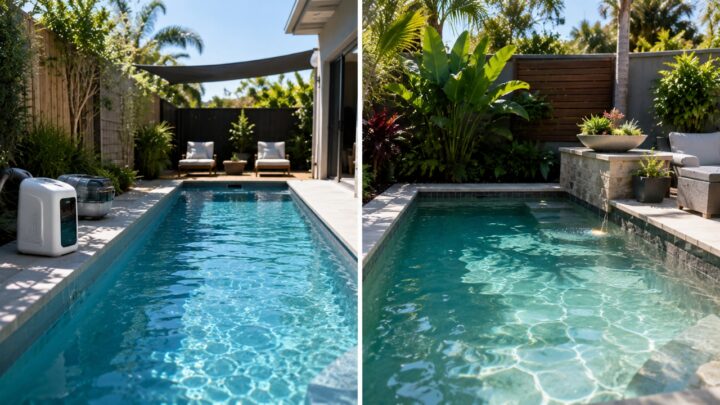
Small backyard pools, plunge pools, and cocktail pools change the math because water volume is lower.
A compact plunge pool often costs less to build and maintain than a full-size pool, with installation costs commonly around $10,000 to $40,000 and an average near $28,000, based on Angi’s plunge pool cost data.
Factor
Saltwater Pool
Mineral Pool
Best for
Lower daily effort, steady chlorine production
Softer-feeling water, reduced chlorine use
Sanitizer reality
Salt cell creates chlorine
Minerals support sanitation, chlorine still needed
Upfront add-on cost
Often $500 to $2,500 for small or plunge pool systems
Wide range, from cartridges to full mineral packages
Ongoing cost
Salt, testing, acid or pH control, eventual cell replacement
Cartridges or minerals, testing, chlorine backup
Skin feel
Softer than standard chlorine for many swimmers
Often silkier, especially magnesium systems
Main risk
Cell failure, scaling, pH drift, salt exposure near stone or metal
Overpaying for vague “chlorine-free” claims
Better small-yard fit
Most practical choice
Good premium comfort choice
Saltwater Pool Explained
A saltwater pool is a chlorine pool with a salt chlorine generator. The system adds dissolved salt to the water, then uses electrolysis inside the salt cell to produce chlorine.
Hayward lists the ideal salt range for many residential salt systems at 2,700 to 3,400 ppm, with 3,200 ppm as the target.
It also notes that salt does not evaporate or wear out, so loss usually comes from splash-out, backwashing, overflow, or water replacement.
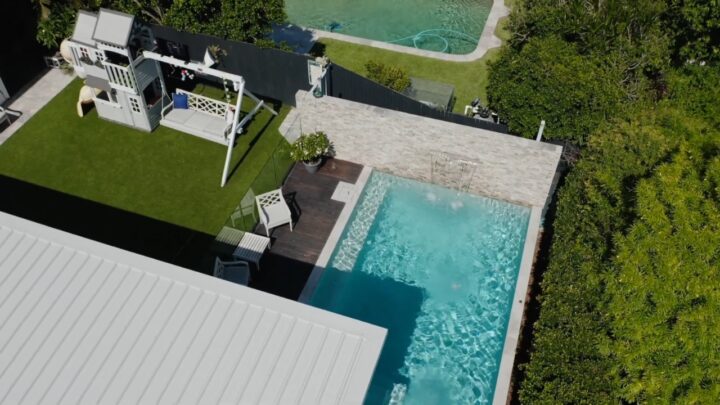
For a small backyard, that detail matters. A 7-by-7 plunge pool or 10-by-16 cocktail pool does not need the same chemical volume as a large family pool. The equipment still needs proper sizing, though.
Angi says a 10,000-gallon pool may need a generator rated for 15,000 to 20,000 gallons, depending on use level, in its saltwater conversion guide.
The consequence is simple: undersized salt equipment saves money on day 1, then struggles during heat waves, parties, and heavy weekend use.
Mineral Pool Explained
View this post on Instagram
A mineral pool usually means one of two setups: a copper and silver mineral cartridge system, or a magnesium and mineral salt system. The phrase is loose, so ask the builder exactly which minerals are used and how sanitation works.
Nature2, one of the better-known mineral cartridge systems in the U.S., says its pool sanitizer uses silver and copper and must work with a chlorine delivery device or 0.5 ppm of an EPA-registered chlorine pool product, according to the Nature2 CF manual.
Nature2’s product page also says its mineral technology can reduce chlorine use compared with the EPA-approved 1.0 ppm minimum for stabilized pool water.
Magnesium mineral systems are more visible in Australia and warm-climate plunge pool markets. MagnaPool, for example, describes itself as a magnesium mineral pool system built around minerals, hydroxinator equipment, glass filtration media, and test strips on the brand’s mineral pool system page.
The key point is that mineral pools may feel better, but minerals alone should not be treated as a complete sanitation plan.
Saltwater Pool Cost In A Small Backyard
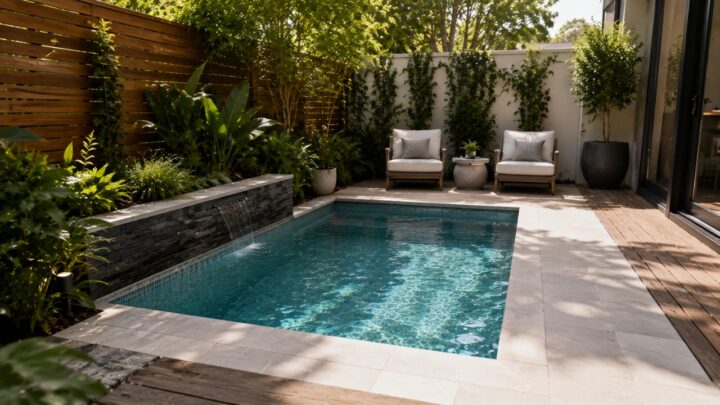
Saltwater usually has the clearer cost path. Angi puts saltwater conversion at $750 to $1,750 for many pools, with a broader average range from $500 to $2,500.
For aboveground pools, the same guide lists $500 to $1,500, while in-ground conversion runs $1,000 to $2,500.
For a small pool, the lower end is realistic only when plumbing and electrical access are simple. Tight side yards, old equipment pads, buried utilities, and long conduit runs can push labor higher than expected.
Saltwater is not a “set it and forget it” pool. It is more like an automatic dosing helper. It reduces hand-feeding chlorine, but pH, stabilizer, calcium hardness, salt level, and free chlorine still need to be checked. Mineral pool costs vary more because “mineral” can mean a $165.99 replacement cartridge, a $249 vessel-and-cartridge kit, or a full magnesium conversion package. Royal Swimming Pools lists a Nature2 Express cartridge at $165.99, with up to 6 months of use for pools up to 25,000 gallons. The same retailer lists a Nature2 Express vessel and cartridge for in-ground pools at $249.00, also rated up to 25,000 gallons. Other cartridge systems land near the same bracket. PoolSupplies.com lists a Nature2 Professional G25 cartridge for pools up to 25,000 gallons at $179.99, with a 6-month replacement cycle. Full mineral packages can cost far more. Theralux, an Australian mineral pool brand, says existing-pool conversion packages range from A$200 to A$3,500 fully installed, depending on the package, on its existing pool packages page. For small yards, mineral costs feel manageable at first because the pool volume is low. Over 5 years, however, cartridges, mineral bags, replacement media, and backup sanitizer can make the premium feel less small. Saltwater is usually easier for routine maintenance, while mineral pools can feel easier in the water but less predictable in cost. Salt systems produce chlorine steadily when the pump runs. That helps homeowners who forget weekly chlorine dosing. The trade-off is equipment dependency. A failed salt cell can leave the water undersanitized unless someone tests and corrects it quickly. Mineral systems reduce chlorine demand in many setups, but they add another consumable. A cartridge that lasts 6 months still needs calendar-based replacement. Magnesium systems may also require brand-specific minerals and filtration media. CDC guidance matters more than product branding here. Pool owners are responsible for routinely checking chlorine and pH, and CDC notes that sweat, dirt, sunlight, and other contaminants can reduce chlorine levels. In plain terms: the lower the water volume, the faster chemistry can swing. A small plunge pool on a hot Saturday can go from clear to cloudy faster than a larger pool because every swimmer has a bigger effect per gallon. Mineral pools often feel best, but good water balance matters more than the label. Many swimmers describe saltwater as softer than traditional tablet chlorine because the chlorine production is steadier, and the salinity changes the feel of the water. Mineral pools, especially magnesium systems, often feel silkier. That comfort claim is partly subjective, and buyers should be careful with medical-sounding promises about eczema, allergies, or “detox” effects unless a clinician gives personal advice. The more reliable comfort factor is chloramine control. CDC says chloramines form when chlorine binds with swimmer waste, and they can irritate skin, eyes, and the respiratory tract when they off-gas above the water, according to its chloramines and pool operation guidance. A pool that smells strongly of “chlorine” often has a combined chlorine problem, not too much good sanitation. A mineral system can improve the experience, but it cannot rescue lazy water care. Pool owners often compare saltwater and mineral systems as if the pool size were only about square footage. Water volume, pump run time, sun exposure, and swimmer load matter more. A 10-by-16 plunge pool in Phoenix with full sun and 6 kids on weekends has a tougher chemistry job than a shaded courtyard pool used by 2 adults after work. The smaller pool may need oversized equipment, tighter testing habits, and a cover to reduce evaporation and debris. Another missed detail: surrounding materials. Saltwater at proper levels is far below ocean salinity, yet splash-out can still leave residue on coping, metal furniture, soft stone, or nearby planters. Mineral systems with copper need careful monitoring, too, because high metal levels can stain surfaces or hair. Marketing rarely leads with those boring details. They decide on owner satisfaction. Choose saltwater if the pool is used often, the owner wants fewer manual chlorine doses, and the equipment pad has room for proper installation. It is the safest recommendation for most small backyard buyers because the cost path is clearer and parts are widely available. Choose a mineral pool if water feel is the priority and the budget allows recurring cartridges or mineral packs. It makes the most sense for plunge pools, spa-like cocktail pools, and households where swimmers complain about dry skin or strong pool odor. Choose neither upgrade, at least at first, if the budget is tight after construction. A well-maintained chlorine pool with good testing beats an underfunded saltwater or mineral system every time. Saltwater wins for most small backyards because it balances cost, convenience, and comfort better over several seasons. Mineral pools win when a silkier feel is worth extra consumables and a less standardized setup. The honest answer is less glamorous: water chemistry beats branding. Pick the system that matches your budget, pool volume, and maintenance habits, then test pH and sanitizer levels consistently. The best small backyard pool is not the one with the trendiest label. It is the one that stays clean, comfortable, and easy enough to care for after the novelty fades.
Mineral Pool Cost In A Small Backyard
Which One Is Easier To Maintain?
Which Feels Better On Skin?
What People Usually Miss
Best Choice By Backyard Type
FAQs
Final Verdict
