Anti-Waste Cooking – How to Use Leftover Rice, Vegetables, Bread, and Herbs
Leftover rice, vegetables, bread, and herbs can do more than sit in containers until they spoil.
Small amounts of food can become fried rice, soup, patties, croutons, bread pudding, stuffed vegetables, sauces, or quick bowls with very little effort.
Anti-waste cooking is practical. It helps cut grocery costs, reduces trash, and makes weeknight meals faster because part of the cooking is already done.
Cooked rice, tired greens, stale bread, and wilting herbs are not problems. Used well, they are meal starters.
In the U.S., about 30 to 40% of food produced is discarded.
Those numbers make a basic kitchen question worth asking more often: what can this food become?
Leftover Rice Ideas
Leftover rice is one of the easiest foods to reuse because it works in savory meals, soups, baked dishes, patties, and desserts.
Cold rice is especially useful for fried rice because the grains are firmer and less sticky.
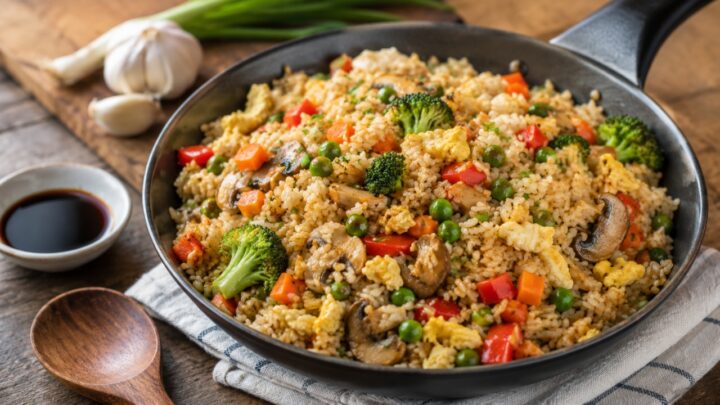
Fried rice is usually the fastest option. Start with cold rice, chopped leftover vegetables, garlic, soy sauce, chili, and an egg.
Onion, mushrooms, broccoli, peppers, meat, or fish can also be added. Cook the vegetables first, add the rice, and stir-fry everything until the rice is piping hot.
Add the egg near the end, then season with soy sauce, chili flakes, or other spices.
A few add-ins can help balance the meal without making it complicated:
- Onion or garlic builds a stronger base before the rice goes in.
- Broccoli, carrots, peas, mushrooms, or peppers add texture and color.
- Egg, chicken, fish, tofu, or cheese make the dish more filling.
- Soy sauce, curry paste, chili flakes, or chopped herbs can change the flavor quickly.
Spicy vegetable rice is another strong option when several leftovers need to be used at once.
A practical version can use:
- 2 cups leftover rice
- 3 boiled potatoes
- 1/2 cup peas
- 1/2 cup sweet corn
- 3 tomatoes
- 2 carrots, garlic, oil, salt, chili powder
- 2 teaspoons tandoori masala or leftover curry paste
Everything cooks together until the vegetables soften and the rice absorbs the seasoning.
Fried leftover bread works well next to spicy rice.
It adds crunch and uses two leftovers in one meal, which makes it ideal when both cooked rice and stale bread need attention.
Rice patties are good when leftover rice feels too dry for a bowl. Mix cooked rice with beaten egg, cheese, chopped vegetables, and herbs.
Shape the mixture into small cakes, then pan-fry or bake until crisp.
Soy sauce, spices, or chili can be added to the rice before shaping for a stronger flavor.
Rice pudding turns leftover rice into a dessert. Cook 2 cups cooked rice with 3 cups milk or cream and 1/2 cup sugar.
Vanilla, raisins, nutmeg, cinnamon, and dried fruit can make it warmer and sweeter. Cook it slowly until creamy, then eat it warm or chilled.
Rice needs careful storage because cooked rice can become unsafe when handled poorly.
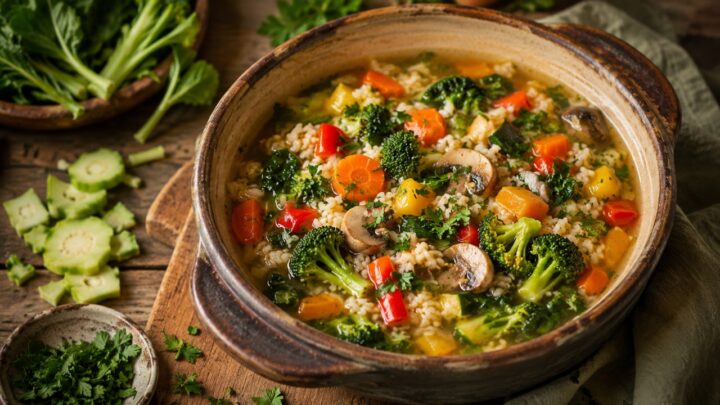
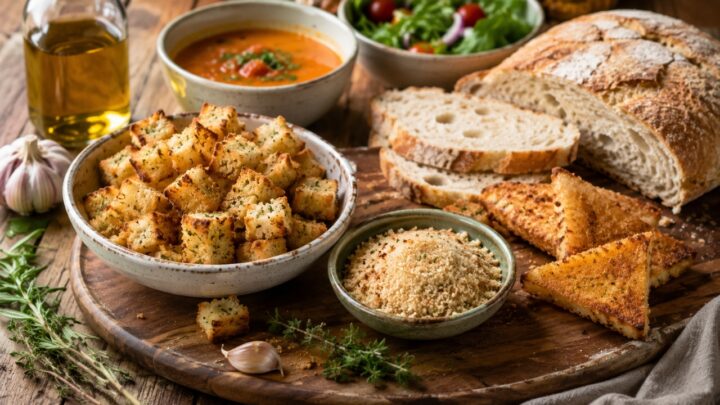
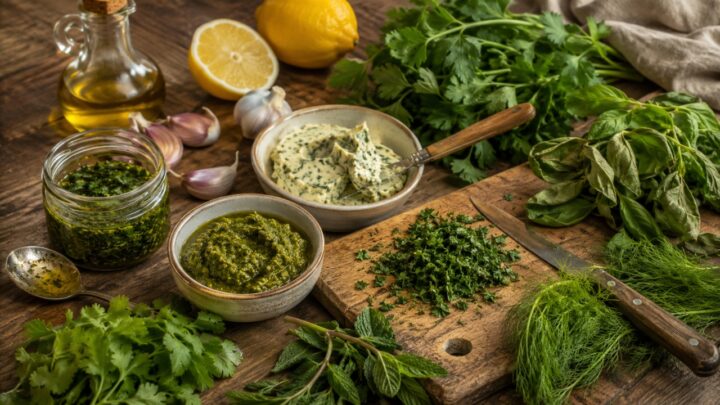
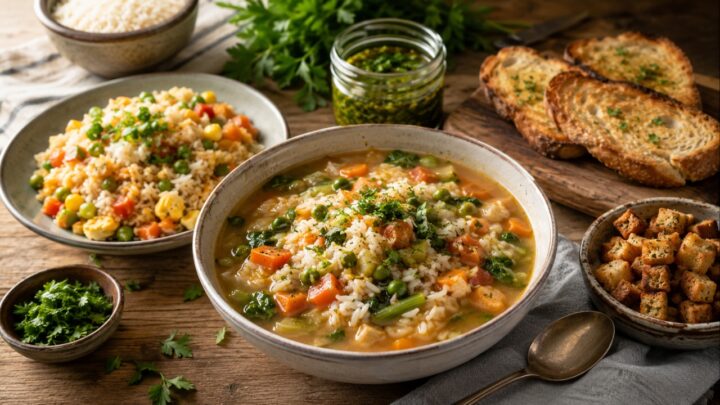
Leftover vegetables can be turned into soup, stir-fries, casseroles, stuffed vegetables, sauces, and rice dishes. Slightly tired vegetables may not look fresh enough for a salad, but they can still work well once cooked. Soup is one of the best uses for cooked vegetables, wilted vegetables, scraps, peels, and herbs. Add them to broth, simmer until tender, then leave the soup chunky or make it smooth. Cooked rice can be added to stretch the meal, thicken the broth, and give the soup more texture. Rice can fit into many soups without making the meal feel heavy: Stir-fries are helpful when only small amounts of vegetables are left. Chop carrots, broccoli, peppers, mushrooms, cabbage, or greens into similar sizes so they cook evenly. Add rice or noodles, then finish with soy sauce, garlic, chili, or herbs. Casseroles give leftover vegetables a second life with very little work. Mix cooked rice, vegetables, sauce, and cheese in a baking dish. Béchamel sauce and mozzarella work well with rice and vegetables because they create a creamy, filling meal. Breadcrumbs can be added on top for crunch if stale bread is also available. Stuffed vegetables are another useful anti-waste meal. Peppers, tomatoes, and courgettes can be filled with cooked rice, chopped vegetables, herbs, and cheese. Large tomatoes and peppers are especially good because they hold the filling well. Add tomato juice or chopped tomatoes for moisture, top with mozzarella or another cheese, and bake for about 20 minutes. Stale bread is one of the most useful leftovers in the kitchen. Dry texture can actually help because stale bread absorbs flavor better than very soft bread. Breadcrumbs are the easiest option. Bake stale bread at 150°C for 30 minutes, then crush or process it into crumbs. Use them for casserole toppings, coatings, pasta toppings, baked vegetables, or meatballs. Croutons are just as simple. Cut bread into cubes, season it, and bake at 150°C for 20 minutes, turning halfway through. Garlic, herbs, olive oil, salt, and pepper can make them taste better. Add croutons to soups, salads, or roasted vegetable bowls. Seasoned croutons are useful because they can change a simple meal fast: Fried bread works well with spicy rice and soups. Cut leftover bread diagonally into triangles, fry until crisp and golden, then place it around a plate of spicy vegetable rice. Crisp bread adds texture and makes the meal feel more complete. Bread pudding and strata are useful when bread is too dry for toast. Savory strata uses stale bread with eggs, milk or cream, vegetables, herbs, and cheese. Roasted vegetables and wilting greens fit well because the egg mixture holds everything together in a casserole-style dish. Other quick uses make stale bread easy to finish before it spoils. Panzanella, bruschetta, toasties, French toast, pita pizza, and cheesy soup toppings all work well. French toast is especially good with stale bread because the bread absorbs the egg mixture while still holding its shape. Leftover herbs often spoil fast, but they can be saved with oil, butter, cheese, water, or the freezer. Wilting does not always mean they are unusable. As long as they are still safe to eat, they can add flavor to simple meals. Herb oil or dressing is fast. Chop or process herbs with oil, lemon, garlic, and salt. Wilting herbs and leafy greens can also be mixed with olive oil and vinegar to make a green sauce for rice bowls, roasted vegetables, sandwiches, or bread. Pesto is another easy way to use herbs and greens. Herbs, carrot tops, leafy greens, nuts or seeds, oil, and garlic can be processed into a thick sauce. Carrot top pesto can be used on pizza, pasta, sandwiches, soup, or raw vegetables. Herb butter and cheese spreads are useful for small amounts. Mix chopped herbs into softened butter or soft cheese. Spread it on toast, use it on rice cakes, add it to stuffed vegetables, or melt it onto bread-based meals. Freezing herbs helps when they cannot be used right away. Chop them and freeze them in oil or water using an ice cube tray. Add the cubes later to soups, sauces, rice dishes, and sautés. Herbs can also last longer when stored upright in water, much like a small bouquet. Anti-waste cooking gets easier when leftovers are paired instead of treated one by one. Rice, vegetables, bread, and herbs can work together in many fast meals. Rice, vegetables, and herbs can become fried rice, rice bowls, rice patties, stuffed peppers, or rice soup. Add egg, cheese, beans, tofu, chicken, or fish if more protein is needed. Bread, vegetables, and herbs can become bruschetta, croutons, panzanella, toasties, or savory bread pudding. Stale bread is especially useful here because it holds flavor without falling apart too quickly. Rice, bread, and vegetables can become spicy rice with fried bread or a rice casserole with a breadcrumb topping. Bread adds crisp texture, while rice makes the dish filling. Leftovers can also be matched by texture, not just ingredient type: Rice, soup, and vegetables can become a quick family meal. Add cooked rice to vegetable soup, chicken soup, lentil soup, chili, or broccoli cheese soup to make it thicker and more satisfying. Stale bread and soup also make a strong pair. Croutons, cheesy bread toppings, and toasted bread slices can make a simple soup feel like a full dinner. Leftovers are ingredients, not waste. Rice can become patties, soup, pudding, or fried rice. Vegetables can go into casseroles, soups, stir-fries, and stuffed peppers. Bread can become crumbs, croutons, strata, or toasties. Herbs can become pesto, oil, butter, or frozen flavor cubes. Best results come with one simple habit: look before tossing. Before throwing food away, ask what it could become.
Leftover Vegetables Ideas
Leftover Bread Ideas
Leftover Herbs Ideas
Simple Meal Combinations
Summary