
6 Butler Pantry Ideas For Small Homes – Shelving, Doors, Lighting, and Layout
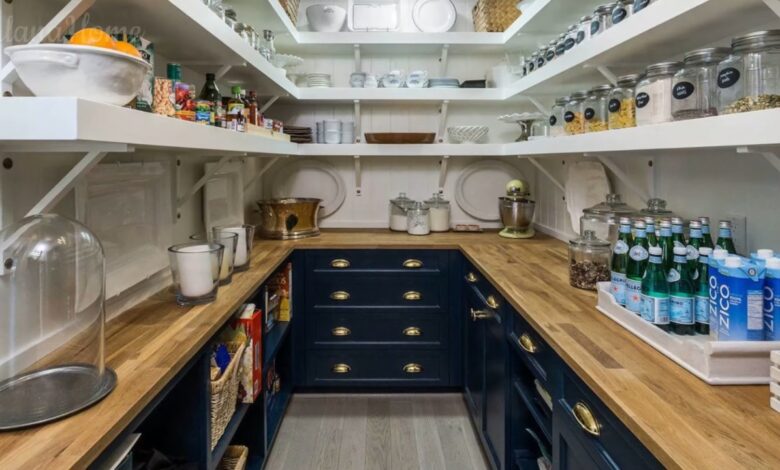
A butler’s pantry is a practical extension of the kitchen, built for extra storage, prep space, small appliances, food staging, and hiding everyday mess.
Modern butler’s pantries usually go past basic pantry storage.
Cabinetry, countertops, small appliances, lighting, hardware, and design finishes make the space feel connected to the main kitchen instead of a plain storage closet.
Small homes do not need a full walk-in room.
A pantry wall, alcove, hallway conversion, compact nook, or upgraded walk-in pantry can still add function when planned around a clear daily need.
1. Use Floor-To-Ceiling Shelving To Maximize Vertical Space
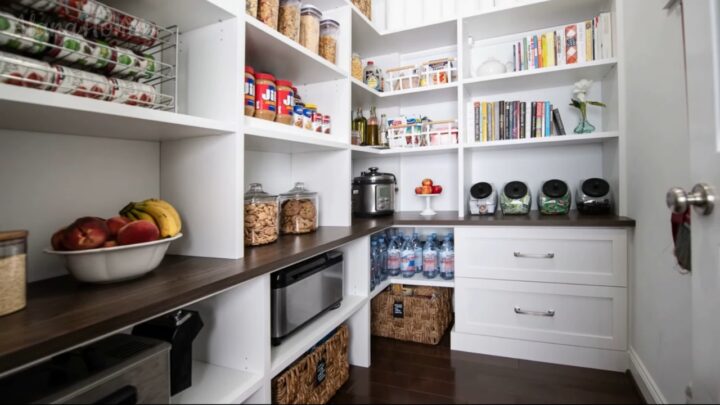
Compact butler pantries need vertical storage because wall height often offers more opportunity than floor area.
Floor-to-ceiling cabinets or shelving increase capacity, draw the eye upward, and help a small pantry feel taller.
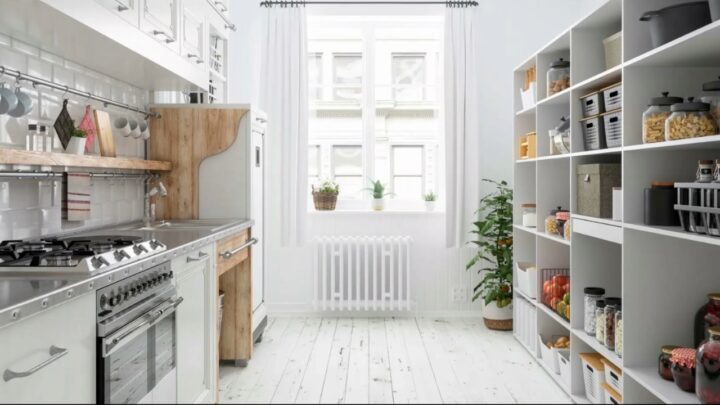
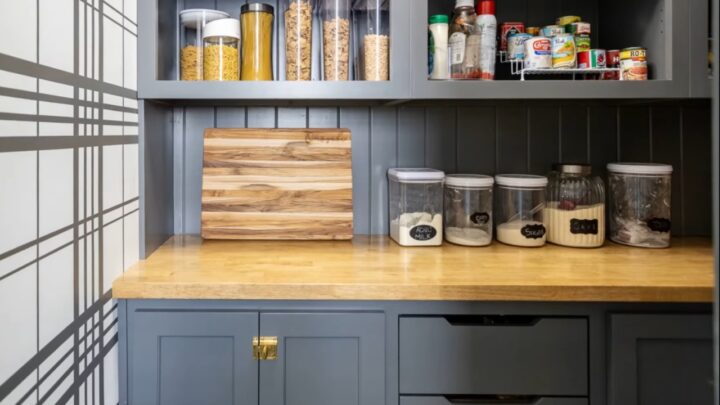
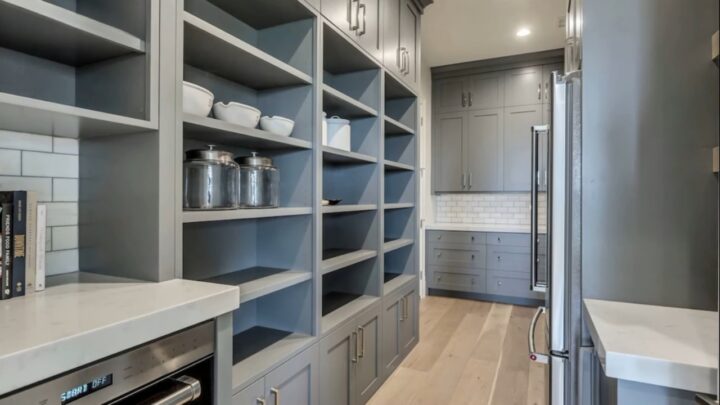
Narrow shelving around 200 mm wide works well for small items without stealing walkway space. Jars, spice bottles, condiments, sauces, tea, coffee supplies, and baking ingredients are easier to see on shallow shelves than in standard-depth cabinets. Adjustable shelving also matters. Cereal boxes, tall bottles, baskets, and canisters all need different heights, so fixed shelves can waste space quickly. Open shelving works best when it has room to breathe. Overfilled shelves make a small pantry feel busy, while carefully spaced shelves keep daily items visible without crowding the counter. Open shelving is useful for daily items, but too much of it can make a small butler pantry look cluttered. A better setup uses open storage for items worth seeing and closed storage for anything bulky, mismatched, or messy. Open shelves work well for mugs, bowls, cookbooks, jars, trays, decor, breakfast dishes, and coffee supplies. Closed cabinets are better for bulk food, cleaning products, packets, appliances, lunchbox clutter, and spare pantry stock. Matching, stackable canisters can help flour, rice, pasta, cereal, snacks, and baking goods look cleaner. Glass jars only work well when the homeowner will decant regularly, since half-empty jars can make shelves look untidy. One flexible shelf or basket should be left open for weekly overflow. Grocery items waiting to be sorted, reusable bags, lunch supplies, and snack extras need a landing spot, or neat storage can quickly break down. Pantries visible to the kitchen or living area usually feel calmer with more closed storage. Consistent hardware, shelving details, faucets, and lighting can make even open storage look planned. Sliding or cavity doors work well for pantry walls and tight kitchen paths. Bifold doors can make a shallow pantry easier to access without taking over the walkway. Hidden doors are useful when the pantry sits in direct view of the kitchen or living room. Flush cabinetry and discreet hardware can help the pantry visually disappear into the surrounding wall or cabinet run. Hidden pantries still need a practical opening. A narrow entry can make carrying trays, unloading groceries, or reaching appliances awkward. Door planning should account for appliance doors, drawer pullouts, bin access, dishwasher clearance, and the grocery path into storage. Small homes may not have space for a traditional walk-in butler pantry, but compact alternatives can still add storage, prep space, and appliance control. A one-wall pantry behind doors can hide coffee gear, breakfast supplies, small appliances, dry goods, and overflow dishes. A hallway conversion can reuse circulation space near the kitchen. A recessed alcove can become a compact prep station with a shallow counter and upper shelves. A butler’s nook or pantry wall is usually a single-run or alcove setup, not a walk-in room. Its job is to hide appliances, add storage, and provide a small landing surface for daily tasks. Useful features include a shallow countertop, compact appliances, outlets, tall storage, pull-out shelving, drawers, and bench space for coffee, breakfast prep, snack assembly, or grocery unloading. A pantry wall can work behind double doors or a cavity slider. When closed, the main kitchen looks calmer. When open, the full appliance and storage zone is ready to use. A linear run of about 1.8 to 2.4 m or more can often work for apartments, cottages, studios, and tight renovations. Open shelves above, drawers below, and a full-height cabinet or pull-out pantry can create strong function without a walk-in aisle. A small butler pantry should support daily movement, not only hold more items. Layout planning should begin with how the household cooks, unloads groceries, makes coffee, packs lunches, entertains, and cleans up. Main zones need clear jobs: Daily-use items belong at eye level or within easy reach. Heavy appliances should sit close to waist height so they do not need to be lifted out of high cupboards. Pantry placement near the kitchen or dining area improves access during cooking, hosting, grocery unloading, and cleanup. A pantry that is too far away may look good on a plan, but feel annoying during daily use. A space without enough width for a comfortable aisle should become a butler’s nook or pantry wall instead of a narrow walk-in corridor. A well-planned wall pantry can work better than a cramped room. Lighting is critical in small or windowless butler pantries. Poor light makes shelves harder to use, creates dark corners, and can make a tight space feel smaller. Lighting should be planned as a working feature, not decoration alone. A pantry used for breakfast, lunch prep, dinner prep, coffee, cleanup, or entertaining needs clear visibility at the counter and inside storage. Pendant lights can define a prep area, coffee station, or wet bar. Sconces can draw attention to cabinetry, hardware, tile, or shelving details. Fixture placement needs careful thought in narrow pantries. Shelves and overhead cabinets can block light, causing shadows on the counter. Good placement keeps prep surfaces bright without glare. Mirrors, glass-front cabinets, glossy tile, pale finishes, and other reflective surfaces can bounce light around the pantry. Paired with task lighting, these finishes can make a tight pantry feel larger. A small butler pantry can add serious function with vertical storage, balanced shelving, space-saving doors, layered lighting, and a layout based on daily workflow. A good pantry should match how the household cooks, stores food, entertains, makes coffee, unloads groceries, packs lunches, and cleans up. The best small butler pantry design is not about size. It is about comfortable movement, smart storage, clear lighting, and careful use of every available inch.
2. Mix Open Shelving With Closed Cabinets
3. Choose Space-Saving Doors For Small Layouts
Door choice can decide if a small butler pantry feels easy to use or cramped. Standard swing doors can block cabinets, appliances, drawers, or narrow walkways.
4. Turn A Hallway, Alcove, Or Pantry Wall Into A Butler’s Nook
5. Plan The Layout Around Workflow, Not Just Storage
6. Layer Lighting So The Pantry Feels Bigger And Works Better
Closing Thoughts
